You've been waiting a week for IT to set up a new VLAN. Your new HMI is sitting in a box because it can't talk to the PLC without the network changes. Production is asking when the upgrade will be live, and you're stuck saying "soon" while refreshing your email for ticket updates.
It's time to stop waiting.
The dedicated plant floor firewall isn't some future technology we're dreaming about. It's here, it works, and it's time to make the case for putting control back where it belongs: in your hands.
I spend my days talking to people like you. OT engineers, operations leads, maintenance teams who keep the wheels turning. And I keep hearing the same story: you're trying to modernize, implement smart manufacturing, maybe just keep your plant running efficiently, but you hit a wall every time you need a network change. Firewall rules, subnet reconfigurations, VLAN adjustments: these should be straightforward, but they get buried in IT's process quicksand.
Don't get me wrong. We've made progress. Network segmentation through VLANs has become standard practice, and that's vital. But too often, that's where the progress stops. What comes next? A mess of band-aid solutions: excessive NAT rules that nobody understands six months later, complex ACLs on switches that make troubleshooting a nightmare, and IT security policies that speak enterprise but don't understand the plant floor.
These aren't just inconveniences. They're vulnerabilities waiting to happen. And when something breaks at 2 AM on a Sunday, you're the one getting the call.
The Real Problem: You're Flying Blind
Here's what I've learned: you can't fix what you can't see, and you can't control what you don't own. Right now, most of you are managing your operational networks through borrowed tools and borrowed authority. Every change requires a ticket, every troubleshooting session requires translation between IT-speak and OT reality.
It's Time for a Different Approach
Here's my take: it's time to champion a dedicated plant floor OT firewall. Not another box for IT to manage, but a tool that puts control back in your hands.
This isn't just about security, though that's critical. This is about having a network device that actually speaks your language. Modbus TCP, EtherNet/IP, PROFINET, OPC UA -- all the protocols that make your plant run. When your firewall understands these conversations, everything changes.
You control the rules, not just the requests. Need to allow your HMI to read from a specific PLC but block all write commands? You can configure that with surgical precision. No more submitting tickets and waiting days for someone else to guess what you need.
You get visibility that actually helps.Stop wondering what's talking to what. See exactly which devices are communicating, what industrial commands they're exchanging, and spot unusual activity before it becomes a problem. When you can see the network conversations in terms you understand, troubleshooting becomes straightforward instead of archaeological.
You protect legacy equipment without the headaches. We all have that ancient PLC or critical controller that can't be updated. An OT firewall acts as a virtual patch, detecting and blocking threats before they reach your vulnerable systems. No downtime, no risky upgrades, just protection.
Ending the IT/OT Standoff
Let's be honest: the IT/OT relationship often feels like a cold war. IT wants enterprise security and regular patching. OT demands uptime and stability. These goals clash, and guess who usually loses? Your operations.
A dedicated OT firewall creates a clear boundary that works for everyone. IT gets enterprise-grade security at the network edge. OT gets granular control of the plant floor. Both sides can do their jobs without stepping on each other's toes.
When Rockwell Automation discontinued their own Stratix 5950 OT firewall and started recommending Fortinet's FortiGate solutions instead, they weren't just making a product decision. They were acknowledging what many of us in the field already knew: purpose-built, best-in-class security beats proprietary solutions every time.
I've seen this shift play out in real deployments. Managing over 100 remote sites with mixed SCADA and enterprise traffic taught me that platforms like FortiGate work because they're built by companies that live and breathe security every day, not as a side project. When you're dealing with both critical SCADA operations and enterprise traffic, you need something that actually understands both worlds.
This Isn't Reinventing the Wheel
The Converged Plantwide Ethernet (CPwE) architecture has been recommending firewalls for Industrial DMZ creation for years. The ISA/IEC 62443 standards explicitly call for zones and conduits with firewalls as enforcement points. We're not talking about experimental technology here, we're talking about established best practices that too many plants still haven't implemented.
The Lesson: Take Back Control
Networks today are too complex and too critical to manage by memory, luck, or "set and forget" strategies. The days of truly deterministic network design are fading. As our systems become more interconnected, perfect predictability isn't realistic anymore.
But that doesn't mean giving up control. It means investing in the right tools and the right approach. A dedicated OT firewall isn't just another security appliance: it's your gateway to truly owning your operational network.
Don't trust a quiet network. Just because it's working doesn't mean it's bulletproof. Assume nothing, document everything, and put monitoring in place that gives you the visibility and control you need to stay ahead of problems.
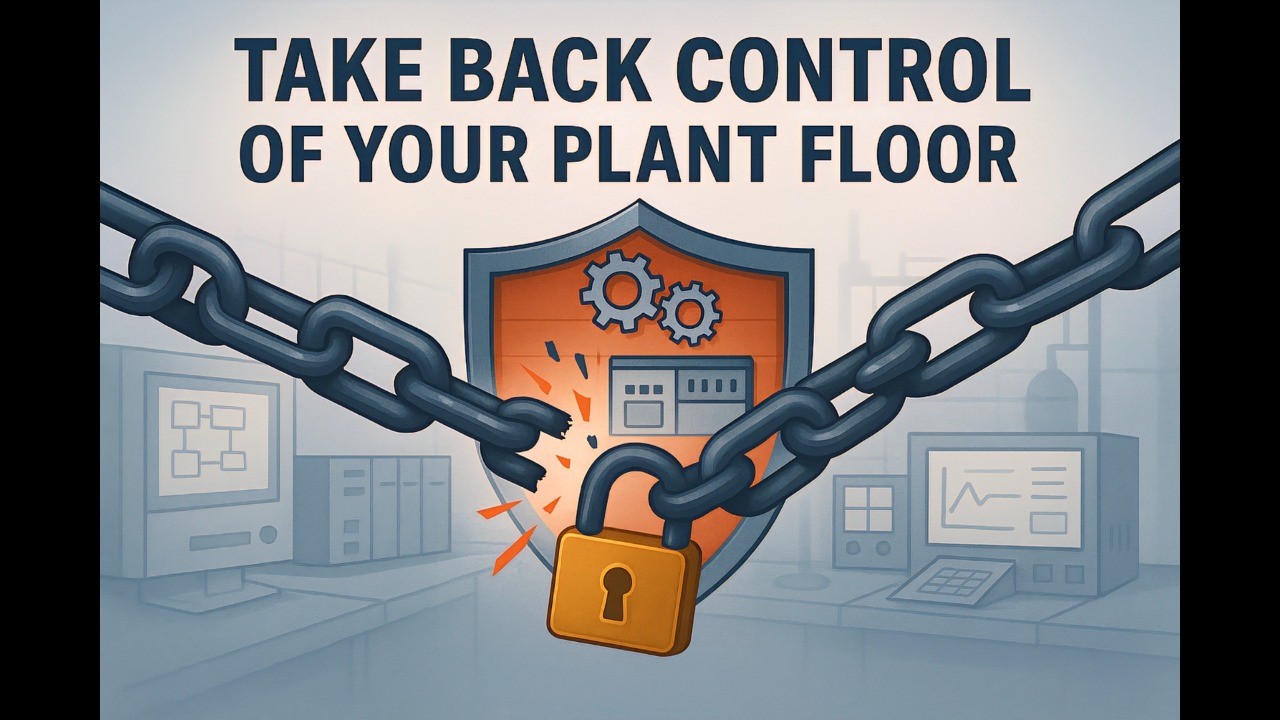
If your network only breaks at 2 AM on a Sunday, you're not alone. But you don't have to stay there. Take back control of your plant floor. Your future self, and your sleep schedule, will thank you.
🌊